
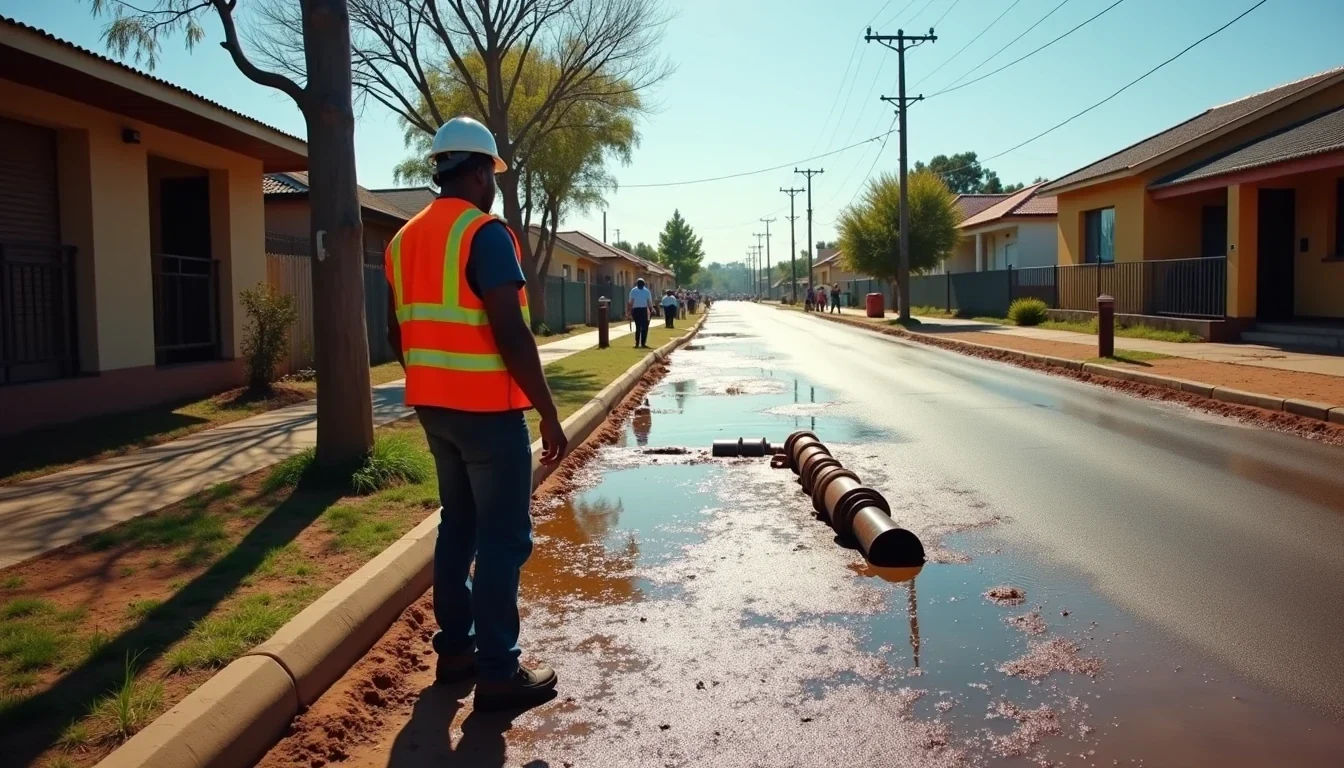
Ramaphosa has put water back on the national stage, but people who can keep pipes from bursting and pumps from dying still need to turn the taps. A new agency and a tougher bill may tidy up the paperwork around the crisis, but they do not make water appear in a dry suburb at 6am.
South Africa keeps minting new structures for an old problem. The failure is usually easier to describe than to fix. Broken mains, delayed maintenance, contaminated reservoirs, treatment plants that limp along for years, and municipalities that seem to discover accountability only after the cameras arrive. The government is trying to rebuild this machine.
A new agency does not reopen a blocked main
The headline move is the National Water Resources Infrastructure Agency, a new state-owned company that would handle investment in bulk water infrastructure. This means the big pieces of the system: dams, transfer schemes, major pipelines—the assets that decide whether a region has water to distribute in the first place.
The idea is to pull strategic planning, development, construction, operation, and maintenance into one place. This avoids scattering the work across the Department of Water and Sanitation and a patchwork of water boards. Rand Water, Umgeni Water, and others already do important bulk supply work inside their own footprints. The new body is supposed to sit above that mess and make the national spend look more orderly.
That sounds sensible until you remember how many South African institutions have looked sensible on paper. A new letterhead does not fix procurement. It does not make a valve close properly. It does not put a qualified engineer in a municipal office where the last competent one left after six months of nonsense. If the agency becomes another place where projects are announced, delayed, re-scoped, and repackaged, the country will have bought itself a more expensive version of the same disappointment.
The stronger argument for the agency is focus. Bulk water infrastructure is too important to be treated like a side hobby of several different bureaucracies. Someone has to own the long game: the dams, the pipes, the transfers, the maintenance schedule, the funding pipeline. But ownership only matters if the owner can actually act. A state-owned company can centralise the work, but it can also centralise failure.
The bill tries to put names next to the damage
The Water Services Amendment Bill is the sharper tool in the package. It goes after municipal managers who let water services collapse, with the possibility of personal liability if they fail to manage the function properly. This is the right instinct. Municipal systems have become expert at absorbing failure inside the institution until nobody is specifically responsible for anything.
The trick is in the wording and the enforcement. “Proper management” sounds neat in a press release. In a real municipality, it gets tangled up with political interference, weak budgets, broken supply chains, and staffing shortages. A manager can be negligent, or unlucky, or both. If the law cannot tell the difference, it will either be toothless or used as a club against the easiest target in the room.
That risk matters because water failures are not produced by one villain in a clean office. They are usually a chain of bad decisions. A budget is cut. A contractor is chosen badly. A pump station goes without maintenance. An engineer leaves. A tender stalls. The reservoir runs low. Then the municipality blames weather, theft, sabotage, or load shedding and waits for the next meeting.
Personal liability changes the conversation because it makes the cost of failure human. It tells municipal managers that their signatures are not decorative. That is useful. It also raises the stakes for capable people who may already be wondering why they should walk into a politically poisoned post with a target on their back and no reliable support behind them.
The damage is already visible
The reason all of this is happening now is simple: people are tired. Ramaphosa said as much, and he is not wrong. Households have had enough of tap water that comes and goes on a schedule nobody understands. Businesses have had enough of planning around tanker deliveries, storage tanks, backup pumps, and the daily question of whether the premises will function after lunch.
The crisis is not abstract. It shows up in broken infrastructure that should have been replaced years ago, in poor water quality, in service failures that turn normal life into a queue, and in disease outbreaks like the cholera disaster in Hammanskraal in 2023. That outbreak was a brutal reminder that water systems fail downward. First the pressure drops, then the quality drops, then people get sick.
The business side of this is usually underpriced in public debate. A factory with unreliable water does not become a philosophical problem. It becomes a production problem. A food processor cannot clean equipment properly. A hotel cannot guarantee rooms. A contractor loses time and money hauling water around a site. A small manufacturing line stops because a tank ran dry. Every interruption adds cost, and none of those costs show up neatly in a cabinet briefing.
Municipal water failure also creates its own side industry. Tanker contracts. Boreholes. Storage tanks. Booster pumps. Emergency call-outs. A city starts buying temporary fixes at permanent prices because nobody protected the original system. It is a bad business model wearing a public service badge.
Money alone will not save it
The government has put R156 billion on the table for water and sanitation infrastructure over the next three years. That is a serious number, not pocket change, and it tells you the state understands the scale of the rot. It has also rolled out the National Water Access Acceleration Programme, the National Water Crisis Committee, and the National Water Action Plan, while pushing emergency work such as new boreholes.
All of that is busy, visible, and politically useful. It also risks becoming a pile of labels if the same underlying habits survive. South Africans have seen what happens when funding meets weak delivery. The money goes out, the ribbon gets cut, and the asset still does not work three winters later.
The real test is whether the cash reaches the things that actually move water. Pipes. Reservoirs. Pumps. Treatment works. Control systems. Skilled operators. Maintenance crews. If the spending disappears into consultancies, emergency procurements, and tenders that exist mainly to keep well-connected people fed, the amount does not matter much. A bigger budget is just a bigger target.
The skills gap is another quiet problem hiding underneath the headlines. Water systems need engineers, technicians, planners, and people who know how to keep old equipment alive. When municipalities cannot hire or retain that kind of talent, they get stuck living on deferred maintenance and good intentions. That is when a burst main becomes a neighbourhood crisis instead of an inconvenience.
Public hearings will show whether this is real
Public hearings on the new water laws are about to start, and that will be the first proper test of whether the reform package is built for repair or theatre. Hearings have a way of exposing the difference between a policy that understands operations and one that just wants to sound stern.
If the new rules are tight enough to define responsibility, compel maintenance, and survive political interference, they could mark a real turn. If they end up as another layer of bureaucracy with a proud name and weak enforcement, then they will join the long list of official answers that did not make the water flow any better.
The country does not need more language about transformation. It needs fewer burst pipes, fewer dead treatment works, fewer excuses, and fewer mayors acting surprised when their residents run out of water. The agency, the bill, and the money may help. They will only matter if someone is finally willing to be held to account when the taps go dry.