The fastest way to burn cash in a South African business is to own a delivery fleet before you have the volume to justify it. A bakkie sitting in the yard still costs money. A truck that needs a service still needs rent, insurance, tyres, fuel, licensing, a driver, a tracker, and someone senior enough to care when the whole thing is late again.
That is the part operators like to ignore because ownership feels tidy. The fleet is “theirs”. The routing is “under control”. The reality is messier. Transport turns into a fixed overhead, and fixed overhead is brutal when your order flow is uneven, your margins are thin, and your attention should be on sales, cash flow, and execution, not on whether a gearbox is about to give up on the N1.
Fleet ownership looks efficient until you price the admin
The sticker price of a vehicle is only the first invoice. After that comes depreciation, which quietly eats the asset while the business keeps acting like it owns something valuable. Add diesel or petrol, commercial insurance, licensing, roadworthy costs, repairs, tyres, and the occasional breakage that lands on a bad week and the numbers stop looking heroic.
Then there is the labour side. Drivers do not recruit, train, supervise, and replace themselves. Neither do helpers, route planners, or the person who has to chase paperwork when a delivery is disputed. In South Africa, compliance is not decorative. Working hours, rest periods, UIF, WCA, and basic employment admin all sit on the same ledger as the fuel card.
A fleet also creates downtime, and downtime is poison when customers expect same-day movement or a clean handover. One breakdown can throw off a whole route. One accident can pull a vehicle out of service for days. Theft risk, hijacking risk, and tracking subscriptions all become part of the cost of doing business, whether the business is ready for them or not.
Pay as you go is usually the smarter move
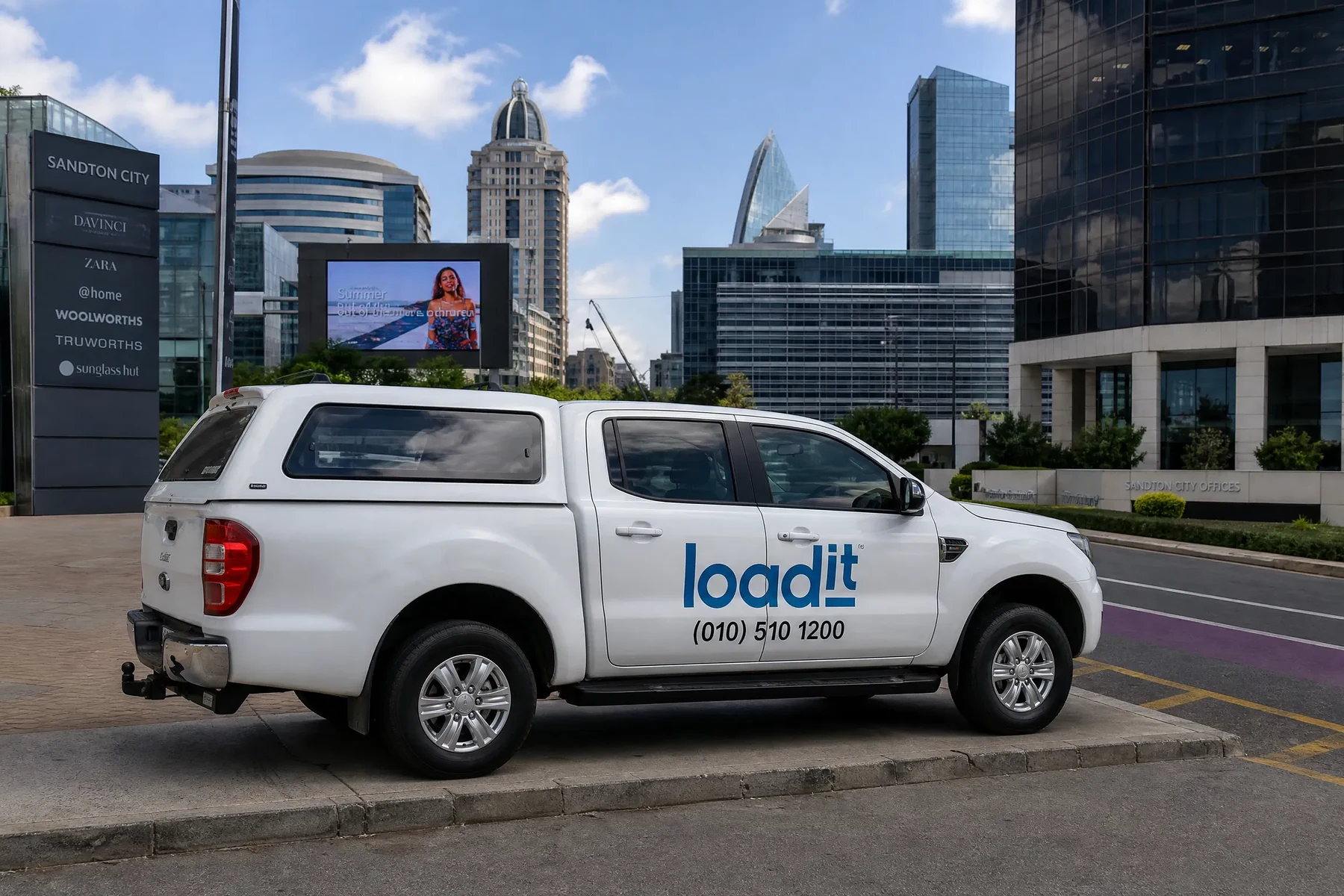
For many firms, the better play is to treat transport as a service, not an asset. That is where an on-demand platform like Loadit makes sense. It connects businesses with trucks, bakkies, drivers, and helpers when the job exists, not when the balance sheet says it should exist.
The basic financial logic is simple. You swap fixed cost for variable cost. You stop carrying vehicle debt, maintenance bills, and payroll for capacity you are not using every day. Loadit’s business model is built around that idea, with vehicles ranging from ½ Ton Bakkies and 1 Ton Bakkies up to 8 Ton Trucks, so a company can match the vehicle to the actual job instead of overbuying out of habit.
That flexibility matters for businesses that live on uneven demand. A retailer with a few big customer deliveries. An e-commerce operator shipping a bulky order. A manufacturer shifting stock between sites. A branch network moving furniture, archive boxes, printers, or IT equipment. The transport need is real, but it does not justify a permanent fleet sitting on the books.
Loadit says its least-cost routing and scheduling can cut transport spend by up to 40 percent. Even if a business only captures part of that saving, the bigger win is control. Cash stays inside the company instead of being trapped in metal, maintenance, and insurance.
The hidden cost is management time
A fleet does not only consume money. It consumes attention, and attention is the scarce resource in any serious business. If the founder or operations manager is spending half the morning solving delivery problems, they are not growing the business. They are acting as an unpaid fleet controller.
That is why services like truck and bakkie hire can be a cleaner commercial choice than ownership. The value is not just that the vehicle arrives. It is that someone else handles the dispatch, driver allocation, route planning, and job coordination while your team keeps pushing sales, service, and margin.
Loadit leans hard into that operational relief. Its business offering includes same-day deliveries, 24/7 service, real-time vehicle tracking, SMS updates, and help with loading and offloading. For a busy operator, that is less noise, fewer handoffs, and fewer places for a simple delivery to become a political problem.
The best use cases are obvious
Some jobs still justify dedicated transport. Most do not. The smartest users of on-demand logistics are the ones with lumpy, practical needs.
Think of e-commerce sellers moving stock from warehouse to customer. Think of a solar installer collecting panels and inverters from suppliers. Think of a furniture store delivering to a buyer in Sandton or the Southern Suburbs. Think of an events company with multiple drop-off points and a hard deadline. Think of a practice manager or property operator shifting desks, chairs, filing cabinets, or tenant furniture between buildings.
Loadit covers Johannesburg, Pretoria, Centurion, Midrand, Randburg, Sandton, Roodepoort, Cape Town, Durban, and surrounding areas. That matters because logistics only works if it exists where the business actually operates. A clever platform in the wrong city is just a brochure with a login button.
The platform also handles one-off moves that would be absurd to cover with a full fleet. A single couch. A fridge. A washing machine. A Facebook Marketplace purchase. A warehouse collection. A few pallets. That is exactly the sort of job where a company should not be forced to pay for a full removal operation.
Pick the logistics partner like you would pick a supplier
A logistics partner is not a nice-to-have. It is part of the promise you make to customers. Choose badly and the damage shows up in complaints, refunds, and reputation.
Loadit has been operating since May 2017 and says it has completed more than 40,000 trips, with 1,400-plus to 1,944 Google reviews depending on the page being viewed, plus a 4.9 rating shown on its business materials. That does not remove risk, but it does tell you the service has volume, repetition, and public feedback behind it.
For higher-volume businesses, Loadit Essential and Loadit Pro separate ad hoc needs from planned dispatch. Essential covers urgent and once-off work with online booking, proof of delivery, tracking, and reconciliation. Pro goes further with scheduled routing, a dedicated account manager, custom solutions, and flexible payment terms. That is the kind of structure that lets a business scale without buying its own transport headache.
The blunt truth is this: owning a fleet feels powerful, until you calculate the drag. Outsourcing transport keeps capital free, reduces operational clutter, and gives you access to capacity only when you need it. For a South African business that wants to grow without turning logistics into a second company, that is the cleaner move.