
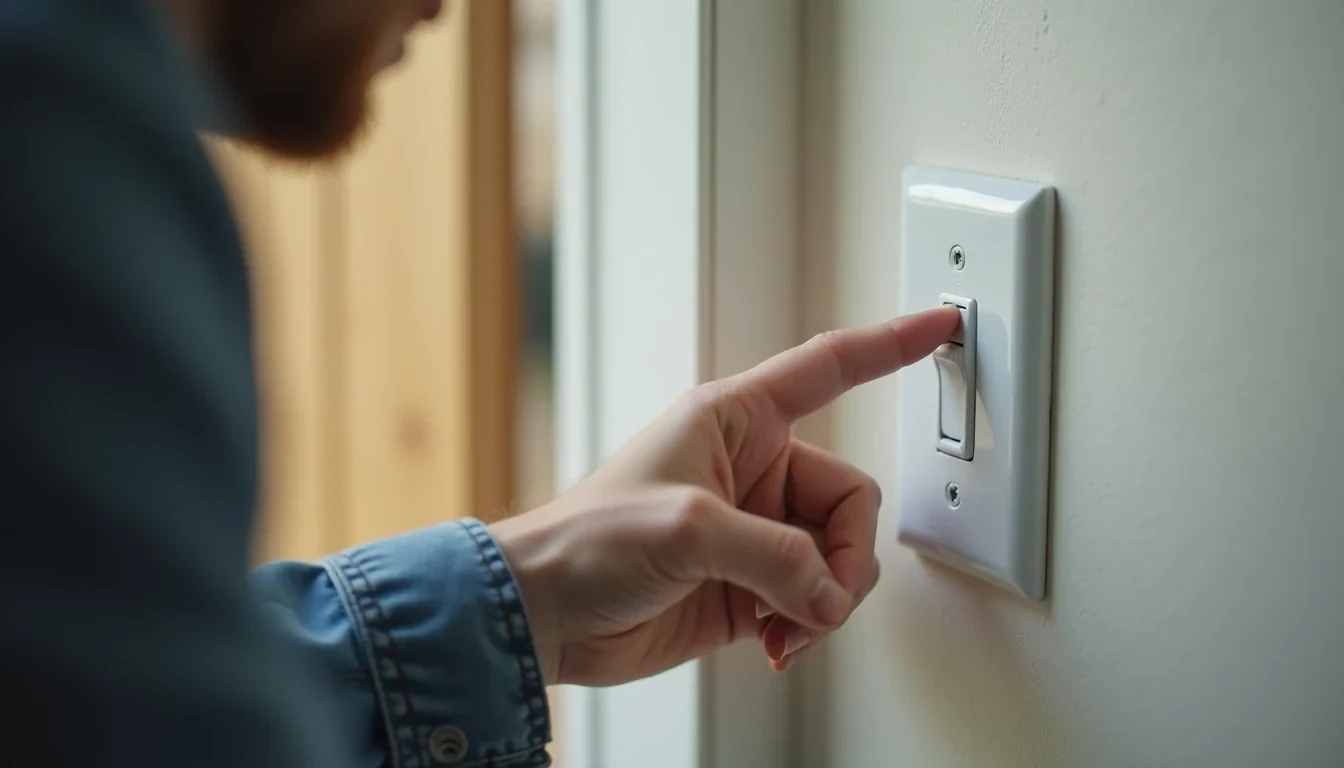
A bathroom light switch in South Africa can tell you more about property risk than a glossy listing ever will. If the switch is inside the room, the first question is not about convenience. It is whether the installation can survive a compliance check, keep people safe, and still pass muster when the property is sold.
Owners often miss this detail. Small electrical details are rarely what people brag about in renovations. However, they often delay a Certificate of Compliance, force a contractor back on site, and turn a neat upgrade into an unbudgeted expense.
South Africa treats bathroom wiring as a risk zone
South African bathroom wiring falls under SANS 10142-1, the country’s wiring code. The logic is straightforward: water and electricity do not negotiate. Wet floors, steam, condensation, and cramped layouts create conditions where a standard wall switch becomes a bad idea.
SANS 10142-1 splits bathrooms into zones around the bath or shower. Zone 0 is inside the bath or shower basin itself. Zone 1 extends up to 2.5 metres vertically and horizontally around that area. Zone 2 reaches a further 0.6 metres beyond Zone 1. Once you map a small bathroom against these boundaries, the “obvious” spot for a switch often disappears.
South African bathrooms often have the switch outside the door or hanging from the ceiling on a pull cord. These are not design quirks. They are compliant answers when internal walls are too close to the wet area, or when plumbing, door swing, and room size leave no safe place for a conventional switch.
An outside location also has a practical reason. A switch by the door lets you turn on the light before you step into a dark room. This matters more than people admit. Fumbling for a switch inside a cramped bathroom can lead to colliding with a door frame, slipping on a wet tile, or hitting the wrong fitting in the dark.
The rules are stricter than many people expect
South Africa is not alone in this. The United Kingdom, Ireland, and much of Europe work with BS 7671, which also uses bathroom zones. In that system, Zone 0 is the bath or shower itself, Zone 1 is directly above it, and Zone 2 extends 0.6 metres sideways. This means a traditional wall switch inside the room is usually off limits, especially in smaller bathrooms where the shower sits near the entrance. A ceiling pull cord or an external switch solves the problem.
Canada takes a similar line. The Canadian Electrical Code bars a switch within 0.5 metres of a bath or shower cubicle. If a switch sits between 0.5 metres and 1 metre, it needs GFCI protection. In a tight bathroom, this can eliminate any realistic interior mounting point.
The United States is the outlier. The National Electrical Code is far more forgiving. It mainly bans standard switches inside the wet footprint of the tub or shower stall itself. This means a regular wall switch can sit close to the shower door, as long as it is not actually inside the stall. Many American homes therefore have interior bathroom switches that would raise eyebrows in South Africa, the UK, or Canada.
Why the switch position becomes a money issue
Bathroom compliance is not a theoretical problem for property owners. If a switch is placed where the code does not allow it, the electrician can flag it during inspection. If the issue appears during a renovation, the job stalls until the wiring is corrected. If it appears when a house is being sold, the CoC can be delayed or fail altogether.
This is where the real cost shows up. A non-compliant switch can force a reroute of cabling, a new mounting point, or in some cases, part of the electrical installation being redone. These are not tiny fixes. They mean extra labour, extra materials, and a slower handover. For an owner trying to refinance, sell, or close out a rental upgrade, that delay can be more expensive than the hardware itself.
There is also liability. Once an electrical defect exists on paper, it sits with the owner until it is fixed. If something goes wrong later, the fact that the problem was known and ignored is not a good look. Buyers, insurers, and attorneys all understand the same point: a neat bathroom is one thing, a compliant bathroom is another.
The compliant options are simple
The rulebook does not leave owners stranded.
A ceiling-mounted pull-cord switch is the standard solution in many South African bathrooms. It keeps the live switching point out of the wet zones and still gives the user control inside the room.
An external wall switch also works, provided it sits outside the restricted bathroom zones and still controls the light effectively. In a house where the entrance wall is dry and accessible, this is often the cleanest option.
For ambitious owners, the lesson is not to get clever after the tiler is finished. The electrical layout should be decided early, before the walls are closed and before the bathroom dimensions force a bad compromise. A competent, registered electrician will spot the problem long before the inspector does.
The best move is to design for inspection
Small rooms punish bad planning. A shower near the door, a narrow wall, a basin cabinet in the wrong place, and suddenly there is nowhere legal for a switch to go. At that point, compliance is not about aesthetics. It is about avoiding a second round of work.
If you are renovating or building, treat bathroom electrical layout like any other asset decision. Specify the switch position in the plan. Ask how the room will pass inspection before the first tile is laid. Keep the invoices and the schematic. When the CoC is requested, you want clean paperwork, not an argument over why a switch ended up one metre too close to the shower.
This is the real value of a detail most people ignore. The bathroom switch is not a trivial fixture. It is a compliance test hiding in plain sight, and in property, compliance has a way of deciding who gets paid on time and who gets a surprise bill.