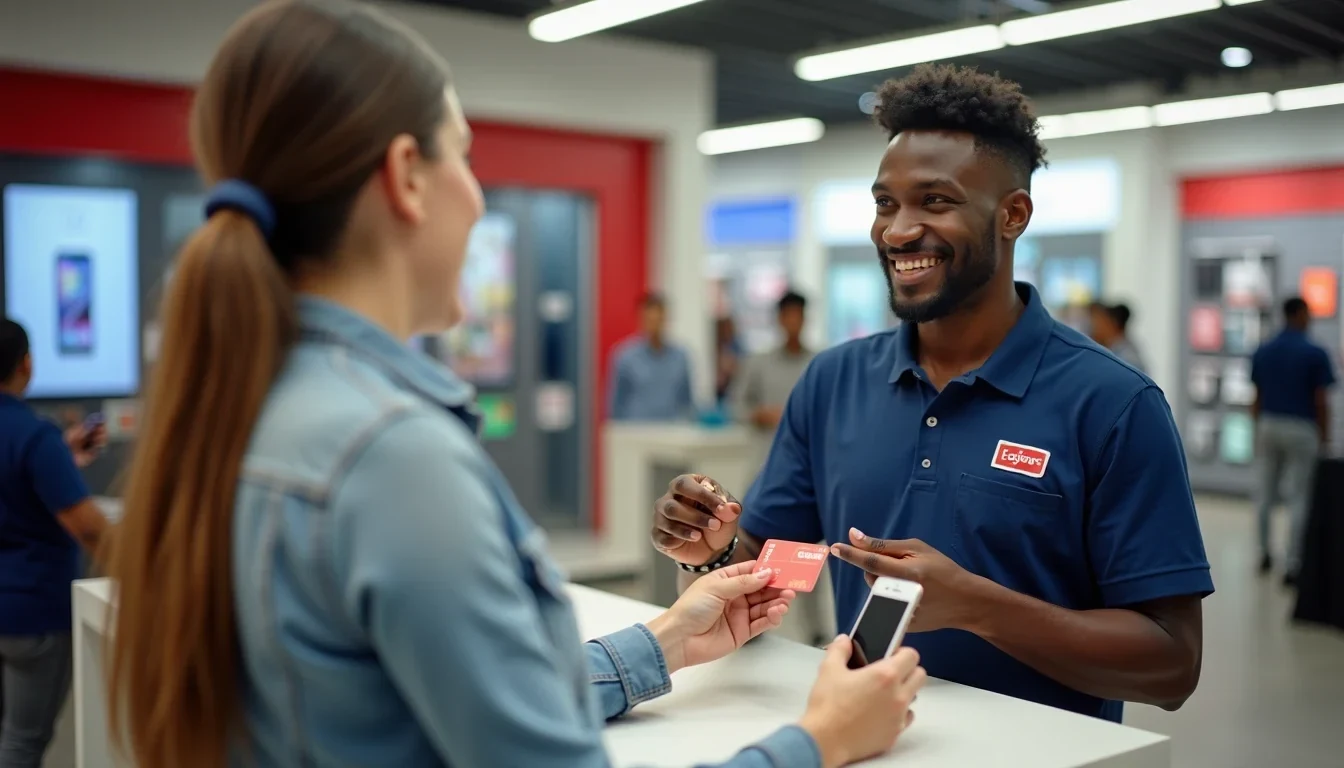
Edgars is doing what weak brands avoid and strong retailers do when the numbers stop flattering them. It is walking away from the safety of a single category and putting its name on a harder, messier market where devices age fast, margins are tight, and customers compare prices before they even leave the parking lot.
The first standalone Edgars Connect cellular store has already opened, with more to follow. Retailability is betting that an iconic fashion name, a built-in credit base and a familiar mall footprint can buy the company a seat at a table long occupied by network giants, mass retailers and specialist phone shops.
Why Edgars is making the move
Fashion retail is useful until the customer’s spending shifts somewhere else. Phones, data and accessories have become part of everyday household spending, and for a retailer like Edgars, that makes cellular a logical place to go hunting for growth.
The attraction is obvious. Smartphones are no longer a niche purchase for early adopters. They are the default tool for work, banking, school, transport, family communication and side income. Demand keeps recycling itself. Devices wear out. Batteries fail. Screens crack. New models tempt buyers. Accessories sell with every handset. Data keeps running out. The category does not sit still, which is exactly why retailers want in.
Edgars also has a built-in advantage that many would kill for: a customer base already used to shopping there, and a credit system that can turn a high-ticket phone into an easier monthly decision. In a country where many buyers cannot or will not pay cash upfront for a decent handset, credit is the difference between a sale and a walk-out.
What Edgars Connect is really selling
On the surface, this is about smartphones, cases, chargers and telecom products. In practice, Edgars Connect is selling convenience and payment access.
That matters because the mobile market is crowded with similar hardware. The actual competition is not only over which phone is on the shelf. It is over where the customer feels safest buying it, how quickly they can get approved, and whether the payment structure fits their month-end reality.
Edgars has been around long enough to carry a kind of retail familiarity that newer entrants do not have. A shopper who already trusts the brand for clothing may be more willing to buy a handset there than at a shop they only visit when their screen dies. Add the Edgars Card and a loyalty layer through Edgars Club, and the company can create a purchase path that is less transactional and more sticky.
The play here is folding the phone into a bigger retail relationship.
The field Edgars is walking into
This is not an empty lane. The mobile market is already claimed by the network operators, and they have the strongest hand in the room.
Vodacom, MTN, Cell C and Telkom Mobile have long-standing customer relationships, store networks, device bundles and contract structures that most retailers cannot match on their own. They know exactly how to package airtime, data and devices into a monthly offer that feels easy to commit to.
Then there are the mass retailers and value chains that have already learned how to move phones as part of a broader basket. Pep, Ackermans, Game and Makro have all made the device aisle feel normal, which is a problem for anyone arriving late with a new logo and a clever pitch.
Edgars is not trying to win by being first. It is trying to win by being familiar.
That is a tougher task than it sounds. Consumers may like the brand, but they will still ask practical questions. Who handles repairs? Which network deals are on offer? How wide is the device range? Are the prices sharp enough to matter? If the answer to those questions is vague, the store becomes a curiosity, not a competitor.
The real strategic bet
Retailability is betting that brand trust plus credit plus location can do the heavy lifting.
That is not a crazy idea. It is, in fact, how plenty of South African retail moves get made. The winners are often not the businesses with the most elegant strategy decks. They are the ones that already have a relationship with the customer and can sell into that relationship faster than the next rival can build one.
Edgars also has the advantage of physical access. Its stores sit where shoppers already go. That gives Edgars Connect a chance to cross-sell to people who came in for clothes and leave with a handset deal, or vice versa. A shopper who came in for a shirt may walk out with a new phone case and a data bundle. Retailers spend millions trying to create that kind of overlap. Edgars already has it, if it can use it properly.
The danger is that the company confuses foot traffic with technical credibility. Fashion retail and cellular retail are not the same job. A phone customer expects product knowledge, plan comparisons, device support and after-sales clarity. A bad experience in this category is expensive because the customer leaves unhappy and tells everyone else not to bother.
What could change for shoppers
If Edgars Connect does this properly, customers should gain more choice, more price pressure and more ways to pay for devices.
That is the upside of a new entrant with a known name. Established players have to respond. They may sharpen promotions, improve bundles or make their own payment options less hostile. Retailers that have coasted on habit rather than service suddenly have to explain why the customer should stay.
Here is the practical effect on a shopper:
| Shopper need | Possible Edgars Connect advantage | Existing market pressure |
|---|---|---|
| Buying a mid-range smartphone | Easier access through store credit | Network stores and mass retailers already compete on price |
| Upgrading an old device | Familiar retail environment | Heavy competition from operators and value chains |
| Picking up accessories | Convenient add-on purchase | Low-cost items are easy to compare elsewhere |
| Spreading payments | Credit-linked buying options | Cash buyers still dominate some categories |
More players in the room usually means less room for lazy pricing. That is good for buyers who compare properly and bad for anyone hoping customers will pay a loyalty tax.
The risk Edgars cannot ignore
The cellular market punishes slow learners.
Phones move fast. Stock that looks current now can look stale in months. Staff need to understand specs, contracts and compatibility. Warranty handling can become a headache. Supplier relationships matter. So does stock planning. If a retailer gets the mix wrong, it ends up sitting on old models that nobody wants at the marked-up price they were originally meant to carry.
There is also the problem of identity. Edgars has spent years being known for fashion. That is an asset until it becomes a limitation. If consumers see Edgars Connect as a side hustle rather than a serious retail channel, the chain will struggle to earn repeat mobile business.
Retailability will need to prove that this is not a logo exercise. A cellular store cannot run on reputation alone. It has to function like a retail machine.
Why this move matters beyond one brand
Edgars’ entry blurs a line that has already been thinning for years. Clothing retailers are no longer just clothing retailers. General merchandisers are selling devices. Telecom groups are behaving more like lifestyle retailers. The old boundaries are less useful than they used to be.
That shift tells you something about where retail margins live now. Businesses are chasing bigger shares of the same household wallet. If one basket is under pressure, they look for another. Phones are attractive because they are essential, visible and repeatable. They also connect to everything else people buy, from data to headphones to covers to finance plans.
For the broader market, that means more competition and less patience for stale models. For the established players, that means they cannot assume a customer walks into a device store out of habit. The shopper may now pick up a phone where they buy school shoes, a hoodie or a dinner outfit.
The lesson ambitious professionals should take from this
Edgars is not winning because it found a fresh trend. It is moving because it identified a growth lane where its existing assets still have value.
That is the useful lesson for anyone trying to get ahead in a corporate environment. Growth often comes from using what you already have in a new way. Brand trust, customer access, credit, location, distribution, relationships—those are advantages if you know how to redeploy them.
The other lesson is more uncomfortable. Expansion looks exciting from the outside. Inside the business, it usually means new skills, new partners and new operational pressure. The companies that handle it well are the ones that respect the complexity instead of pretending a new market will behave like the old one.
For professionals trying to move up, that is the point. The people who get promoted are rarely the ones who wait for a perfect opening. They are the ones who spot where the business can move next, then build the case and the capability to make it happen. Edgars is doing that at retail scale. The logic is the same in a sales team, a product unit or a leadership role.